In the NoHo Arts District, Tuesday Night Is the New Saturday
August 27, 2026
August 27, 2026
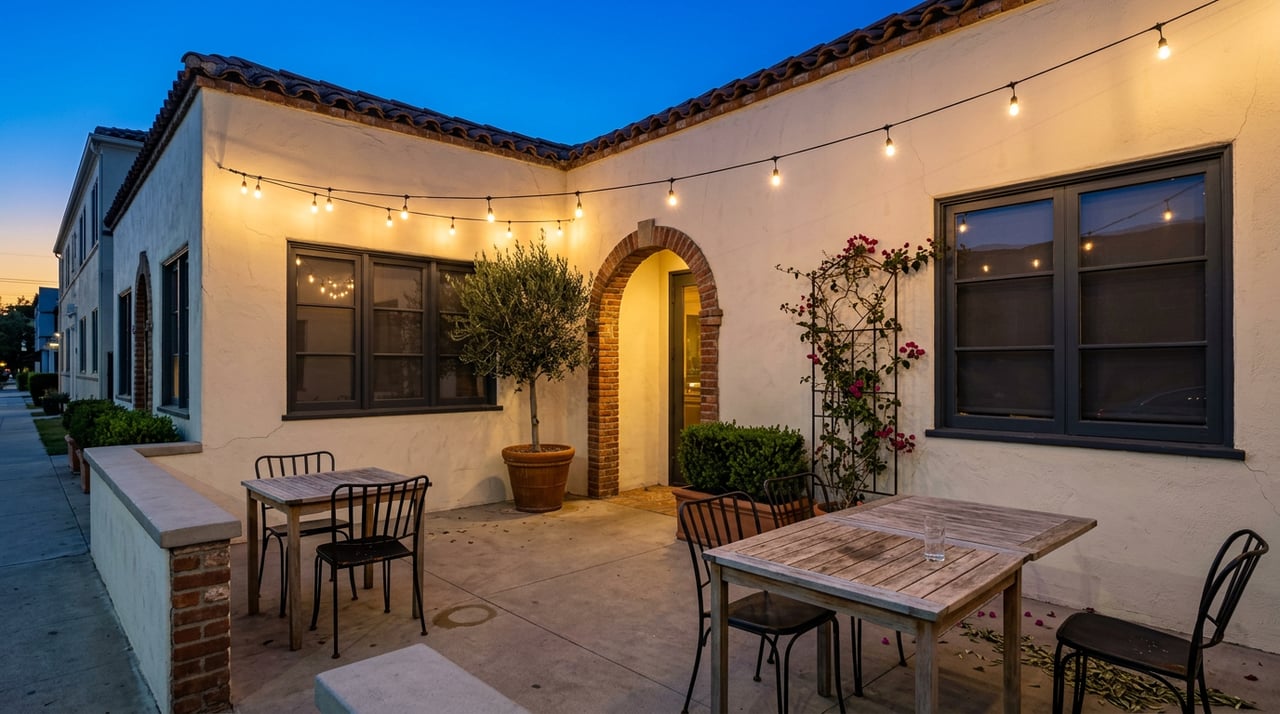
Walk down Magnolia Boulevard on a Tuesday around 8 p.m. and you will find a hundred-cap room half full, a songwriter round already two songs deep, and a bartender who knows half the faces without asking for their order. Five years ago that same room would have been dark until Friday. That single shift, quiet and easy to miss if you only pass through on weekends, is the real story of the NoHo Arts District in 2026.
Most write-ups of this neighborhood still treat it like a weekend destination: a place you visit for a Saturday show, then leave. That framing was accurate once. It is no longer how the district actually runs, and the difference matters if you already live here and want to know what your neighborhood is becoming.
The most underrated shift in the district over the past year is the rebuild of its small-room music scene. A new wave of NoHo venues has moved away from booking a single weekend headliner and toward something scrappier and more durable: Monday-through-Thursday residencies, songwriter rounds, small-jazz bookings, and Latin-Americana double bills that fill a hundred-cap room on their own terms. The economics are tighter than a big Saturday draw, but the rooms are open more nights, and the bartenders are seeing the same faces come back.
That matters beyond the music itself. A neighborhood with a viable weeknight music economy behaves differently than one that only wakes up on weekends. It props up the restaurants next door, keeps the bookshops from going quiet by 8 p.m., and gives the after-curtain crowd spilling out of the theatres somewhere to land on a Wednesday, not just a Saturday. That kind of cross-subsidy between performance and food is easy to overlook because it doesn't show up in any single announcement. It shows up in whether the block feels populated or empty at 9:45 on a weeknight.
The restaurant layer has become the quiet engine behind that confidence. Delish Thai Kitchen, The Alley Burger, and Pitfire on Vineland, alongside a new wave of patios climbing Magnolia toward the Tujunga corner and the long-standing late-night spots on Lankershim, have built an after-curtain economy that now runs to eleven or midnight on weeknights without depending on tourists to fill the tables.
The scheduling logic behind that is deliberate, not accidental. Theatre operators are timing curtains with food service in mind. Restaurants are building pre-show prix-fixe menus designed to turn over by 7:30, clearing tables before the house lights go down. The dessert-and-bar crowd that drifts out of a 99-seat theatre around 10 p.m. finds open kitchens within a single block, every night of the week, not just Friday and Saturday. That kind of coordination between a theatre's curtain time and a restaurant's menu turnover is the sort of detail that only shows up when you're paying attention to how a neighborhood actually operates after dark, and it is arguably the most under-discussed structural strength NoHo has relative to other Los Angeles arts neighborhoods still trying to fill a room on a Tuesday.
The small-house theatre calendar backs this up in a way that's easy to verify if you've been watching ticket sales rather than just marquees. The Road Theatre Company is running a full mainstage slate alongside its long-running playwrights group. The Sherry Theater has a back-to-back run of new American work. The Sage Center is staging a double feature that pulls in exactly the kind of weeknight audience that used to be the first thing to disappear whenever a neighborhood's arts budget tightened.
Here's the number that actually tells the story: producers report that ticket buyers are purchasing further out in 2026 than they did in either 2024 or 2025. That's not a flashy statistic, but it's the most reliable soft indicator a small theatre community can offer about its own health. Audiences who buy early are audiences who trust the calendar will still be full by the time the date arrives. A neighborhood recovering from a rough stretch doesn't get that kind of advance commitment. A neighborhood that has settled into something stable does.
The summer calendar has leaned into that stability. The Hollywood Fringe Festival flows directly into NoHo's biggest open-air stretch of the season, with resident companies taking up residencies on Magnolia and Lankershim through July, and several of this year's Fringe shortlist productions extending their runs into August at NoHo houses. For anyone tracking the district's rhythm rather than just its individual events, that handoff from Fringe into summer programming is the connective tissue that makes the whole season read as one continuous run rather than a string of disconnected weekends.
Some of this year's milestones are bigger than any single booking. The El Portal Theatre is marking its 100th year, a milestone tied to a building with a silent-film history, a run of Hollywood-era filming credits, and hidden WPA-era artwork inside its walls. A theatre that has stood on Lankershim for a century is not incidental texture. It's the anchor the rest of the district's weeknight momentum is built around.
The calendar around it has kept a steady beat all year. In January, the fourth annual Lankershim Lunar Block Party filled Lankershim Boulevard between Otsego Street and Magnolia with Korean, Vietnamese, and Chinese cultural performances, arts and crafts, and food trucks, produced jointly by the maker's market MAUM and the city's Department of Cultural Affairs. It's the kind of event that closes an actual street rather than borrowing a parking lot, and it signals how far the district's civic partnerships extend beyond its theatre scene.
That momentum carries into fall. On September 5, 2026, KCRW Summer Nights closes out its season with a final stop at 11136 Magnolia Boulevard, right in the arts district, featuring live music, DJs, and a beer garden presented in partnership with Los Angeles City Councilmember Adrin Nazarian. Food and drink will come from the beer garden and from NoHo restaurants themselves, which is a small detail worth noticing: even a citywide radio station's marquee event is routing its food dollars through the same restaurant layer that's been quietly running the after-curtain economy all year.
None of this is a single dramatic opening you can point to and say the neighborhood changed overnight. It's a hundred small decisions, a theatre booking a Wednesday reading instead of leaving the room dark, a restaurant building a menu around a 7:30 curtain instead of a Saturday rush, a producer trusting that tickets sold in June will still matter in September. Individually, none of it is a headline. Together, it means the character of the NoHo Arts District now shows up on an ordinary Tuesday as clearly as it ever did on a Saturday night, which is a different neighborhood than the one most weekend-only write-ups still describe.
If you already live near Lankershim and Magnolia, you've probably felt this shift without naming it. It's the reason the block feels occupied at 9:45 on a weeknight instead of shuttered, and the reason a hundred-cap room can survive on a songwriter round in the middle of the week. That's not a small thing for a neighborhood to build, and it's worth recognizing while it's happening rather than after the fact.
If you're weighing what any of this means for your own plans in North Hollywood, whether that's a future move, a rental you're holding onto, or simply understanding how the area around you is changing, Artinian Realty Group knows this stretch of the Valley block by block. Let's Connect whenever you want a conversation grounded in what's actually happening here, not just what the portals say.
Stay up to date on the latest real estate trends.
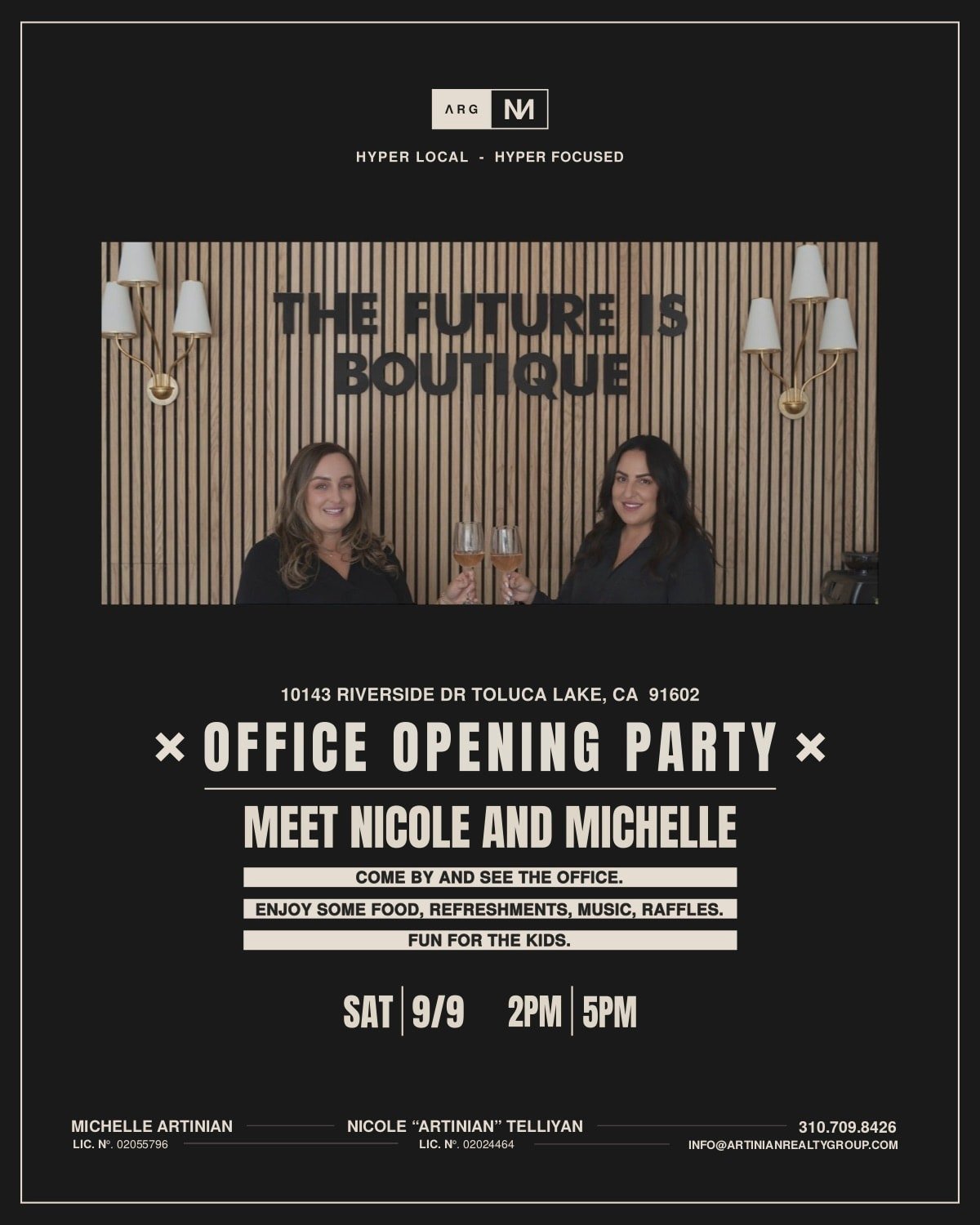
Office Party in Toluca Lake Celebrating Artinian Realty Group
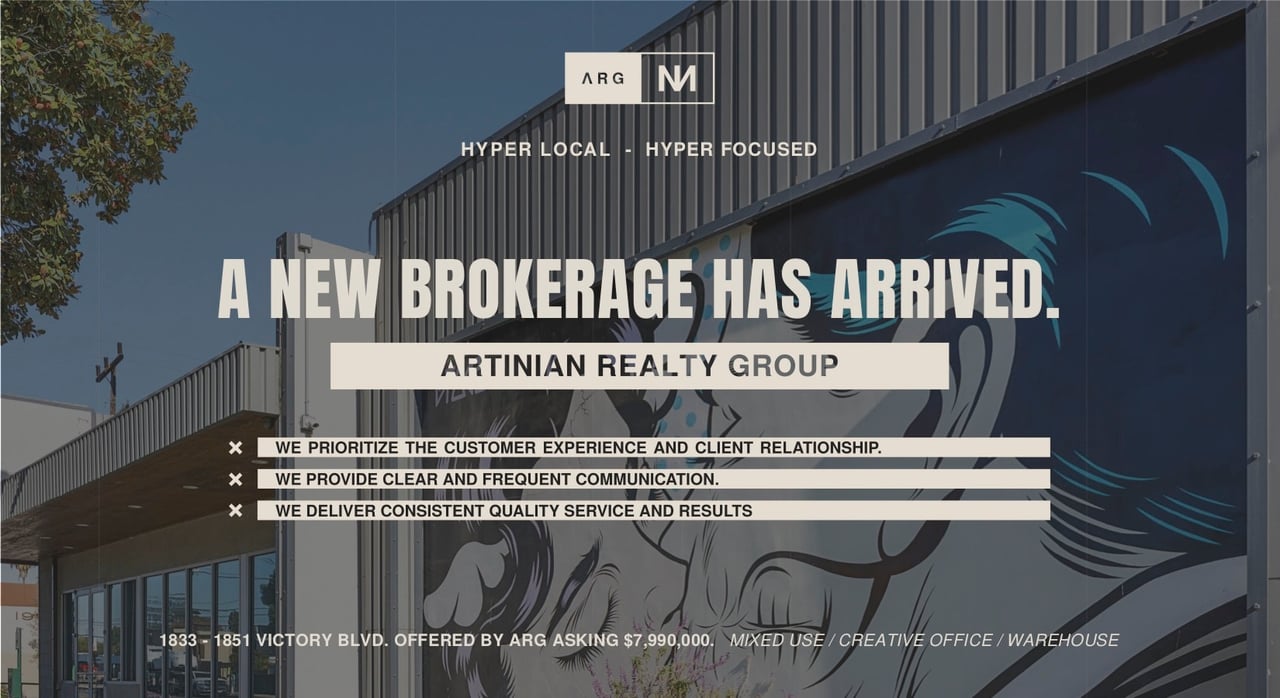
New Brokerage Annoucement for Artinian Realty Group
Led by sisters Michelle and Nicole Artinian, the Artinian Realty Group is a dynamic, full-service team utterly devoted to building lifelong client relationships.
Get in Touch With Our Team to Learn More

NICOLE “ARTINIAN” TELLYIAN
MICHELLE ARTINIAN
10143 RIVERSIDE DR TOLUCA LAKE CA 91602 NICOLE "ARTINIAN" TELLYIAN | CA DRE# 02024464 MICHELLE ARTINIAN | CA DRE# 02055796